

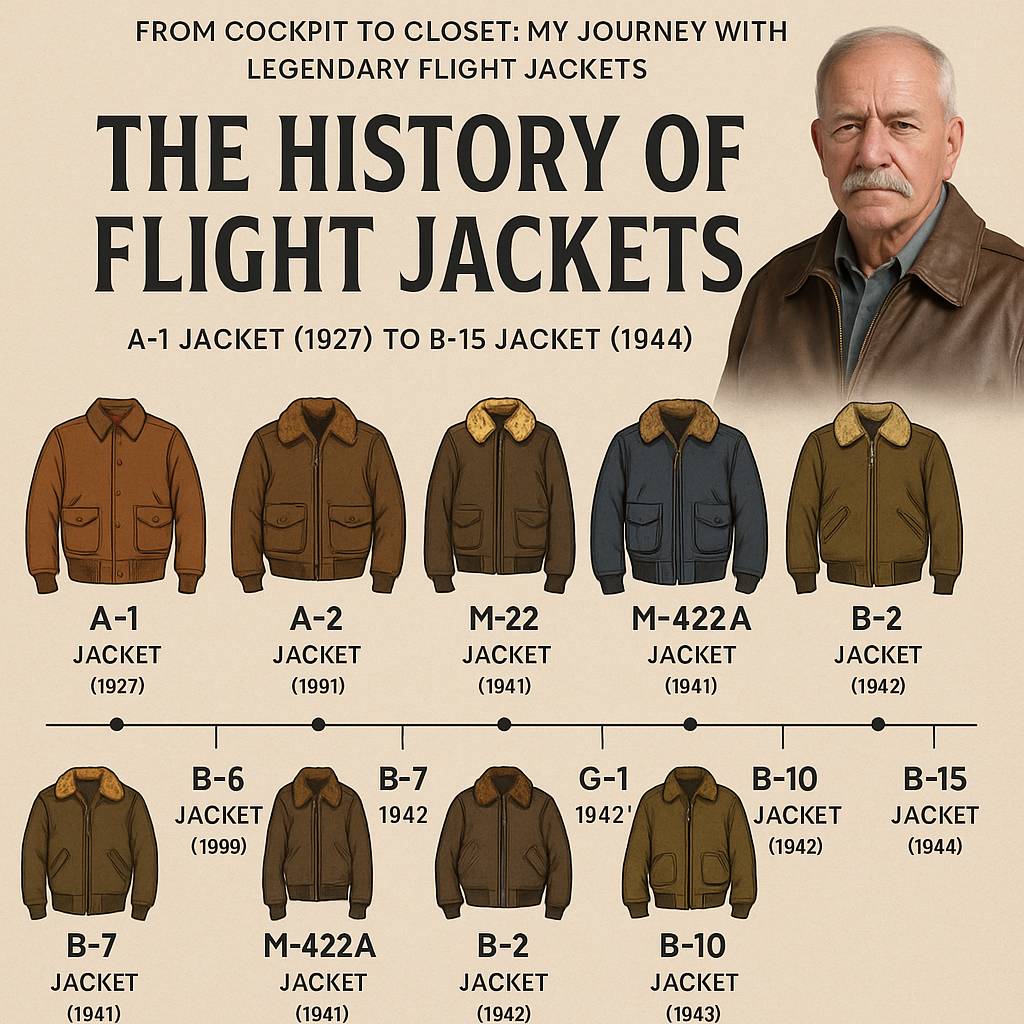
From Cockpit to Closet: My Journey with Legendary Flight Jackets
When you’re soaring thousands of feet above ground, trust me, your flight jacket isn’t just fashion—it’s survival gear, identity, and pride rolled into one. As a retired Air Force officer, I’ve lived my life around planes and pilots, and I’ve witnessed firsthand how each flight jacket became an unforgettable chapter of aviation history. Today, let’s take a ride through history, with me as your guide, exploring iconic flight jackets—from the A-1 all the way through to the legendary B-15.
A-1 Jacket (1927): The Birth of an Icon
The year was 1927, and aviation was still in its daring infancy. Pilots, myself included, have always admired this foundational jacket. Imagine those brave souls in open cockpits—cold air biting at their faces, yet comfortably shielded by this groundbreaking design. The A-1 jacket introduced practical features like durable capeskin leather, horn button closures, and knitted cuffs and collars that snugly kept out the chill. It was a revolutionary step, setting the stage for every flight jacket to come. Personally, I remember hearing veteran pilots speak of the A-1 with reverence—an undeniable piece of our flying heritage.
It’s also important to note that the A-1 served as a transitional design. As aviation technology evolved, closed cockpits and higher altitudes demanded more insulation and less button-flapping. That’s why the A-1 was soon replaced by the zippered and more structured A-2 jacket.
A-2 Jacket (1931): The Legend Takes Flight
Fast forward to WWII, and you’ll find the A-2 jacket—arguably the most iconic bomber jacket ever made. Its rugged, sleek leather appearance wasn’t just practical; it symbolized courage, camaraderie, and determination. Made from horsehide, goatskin, or cowhide leather, the A-2 boasted improvements like a strong zippered front, shoulder epaulets, and snap-down collars that stopped those freezing winds from sneaking in. What made the A-2 truly legendary, though, was how pilots personalized them with painted squadron insignia or mission markers—turning these jackets into wearable battle diaries.
Every A-2 flight jacket I’ve encountered tells its own story, and each carries a legacy of heroism. In fact, it remains one of the most sought-after collectibles in military aviation history.
B-2 & B-4 Jackets (1931–1932): Forgotten Yet Formative
Before we get to the better-known shearling jackets, it’s worth pausing to mention the Type B-2 and B-4. These were early efforts to insulate bomber crews against high-altitude cold. The B-2 was a simpler shearling design, while the B-4 introduced a rare double-breasted cut. Not many survived in collections, but they helped pave the way for the iconic B-3 and B-6.
B-6 Jacket (1939): Comfort Meets Combat
Now, picture yourself at high altitude over enemy territory, your gear better keep you warm, without weighing you down. Enter the B-6 Jacket. This innovative design featured lighter shearling insulation that protected pilots from frigid temperatures without sacrificing crucial mobility. Its streamlined build allowed bomber crews to move effortlessly in cramped cockpits. I recall hearing stories from old comrades about how their B-6 jackets felt like trusted companions, keeping them warm enough to focus entirely on the mission ahead, true proof that good gear can be a lifesaver.
Just for clarity: the B-6 wasn’t a direct replacement for the heavier B-3, but more of a complement in less extreme cold-weather conditions.
B-7 Jacket (1941): Arctic Armor
When missions took aircrews to Arctic conditions, standard jackets just didn’t cut it. That’s when the heavy-duty B-7 came into its own. Imagine facing blistering cold winds at minus-40 degrees; you’d want more than just basic protection. The B-7 was that “something extra”—with thick sheepskin leather, a fur-lined hood, and longer body length, it stood up to the harshest elements. Though fewer in numbers due to specialized use, every pilot I’ve known who had worn a B-7 spoke of it with unmatched respect and gratitude, recognizing its life-saving qualities in unforgiving conditions.
M-422 & M-422A Jackets (1940-1941): Naval Aviators’ Trusted Ally
During my career, I had the pleasure of serving alongside many skilled naval aviators. One jacket they swore by was the M-422 series. Its premium goatskin leather, functional bi-swing back (for unrestricted cockpit movement), and distinctive fur collar made it both practical and stylish. The upgraded M-422A even included small thoughtful additions, such as a pencil slot—vital for taking quick notes during critical moments in flight. Naval pilots I met proudly wore their jackets as symbols of tradition, and those jackets became cherished heirlooms passed down through generations.
G-1 Jacket (1947): Timeless Style & Tradition
Evolving directly from the beloved M-422A, the G-1 jacket became more than gear, it turned into an aviation icon. Immortalized by films like Top Gun, the G-1 embodied naval aviation’s spirit. Its durable goatskin leather, cozy mouton collar, and practical design ensured lasting appeal. I’ve personally seen countless aviators wear their G-1 jackets well beyond service, proudly displaying their patches and squadron insignia at reunions. The G-1 bomber jacket is a tangible connection to their service, heritage, and lifelong friendships formed above the clouds.
Fun fact: The G-1 was standardized under MIL-J-7823(AER) and continued through multiple revisions, proof of its enduring relevance.
B-10 Jacket (1943): Embracing Practicality
When leather supplies became tight during WWII, innovation came to the rescue. The B-10 jacket introduced lighter fabric construction without compromising warmth, using cotton shells with an insulating alpaca lining. It was a practical solution for aviators who appreciated reduced weight and easier maintenance. Speaking from personal experience, practicality is paramount in aviation, and the B-10’s functional design brilliantly met those needs. It signaled a shift toward more versatile materials in aviation apparel.
B-15 Jacket (1944): Gateway to Modernity
The B-15 leather flight jacket was revolutionary, marking the modernization of flight gear with its synthetic blends and thoughtful features. Its handy sleeve pockets for pens, synthetic fur collar for comfort, and nylon shell for durability made it the predecessor of today’s flight jackets. In my later career, I vividly remember younger pilots embracing the B-15’s design; it symbolized innovation and the endless pursuit of improvement—a true reflection of aviation itself.
Legacy Lineup: The Jackets That Shaped the Sky
From the rugged simplicity of the A-1 to the forward-thinking B-15, each pilot leather jacket wasn’t just about warmth – it was about function, identity, and evolution. These pieces influenced everything from the military-issue CWU jackets of the late 20th century to today’s fashion bombers seen on runways and street corners. But ask any vet, and they’ll tell you – none of them quite carry the weight, both literal and symbolic, of the originals.
Final Thoughts: More than a Jacket
As pilots, our jackets symbolize our experiences, challenges, and the unbreakable bonds we’ve formed. They’re pieces of aviation history, woven deeply into our personal stories. Wearing these jackets today, civilian or veteran alike, means carrying forward a proud tradition that began nearly a century ago in the sky. So next time you pull on a bomber or flight jacket, remember: you’re not just wearing leather or nylon. You’re wearing a legacy.
Fly safe and stay proud.
FAQs: Everything You’ve Ever Wanted to Know
Q1: What makes an authentic flight jacket?
Authentic jackets prioritize genuine materials (like goatskin leather or real shearling), accurate designs, and historical details true to the era.
Q2: How do I choose the right flight jacket?
Consider your climate, intended use (daily wear vs. historical appreciation), and personal style. For authenticity, opt for reproductions using original specs.
Q3: Are vintage flight jackets still practical for everyday wear?
Absolutely! Vintage jackets offer unmatched durability and style, making them great everyday wear, especially if properly maintained.
Q4: Can civilians wear military flight jackets?
Yes, civilians wearing these jackets honor aviation heritage. Just remember the history they represent and wear them with respect.
Q5: How should flight jackets be maintained?
Leather jackets need periodic conditioning, and fabric jackets require gentle cleaning. Always follow specialized care guidelines to preserve their quality and authenticity.
Want to see how these jackets look side by side? In an upcoming post, I’ll break down the fit, comfort, and performance of A-2 vs. G-1 vs. B-15 in a veteran’s hands-on comparison.
Until then – Clear skies and tight formation.